
Durham County Arrest Reports
Durham County arrest reports come with a catch. The DCSO publishes no table of every booking. There's no seven- or thirty-day list either. The closest person-level source for the city is Durham Police Police-to-Citizen. Adult-arrest and incident reports surface there after entry and review. DPD cautions that an event can lag several days before it posts. So the channel works for looking back, not for a complete live county roster.
Source boundary: each tool covers one slice. DPD P2C handles city police events, DCSO news covers selected sheriff cases, and the jail roster tracks current Durham detention. Court Portal rounds it out with public case events. None of them alone forms a countywide multi-day booking blotter.
DCSO News posts dated releases on investigations, arrests, safety notices, and other sheriff matters. Ordinary bookings often go unmentioned there. What you get is a source map, not one chronological list.
Read Durham's Multi-Day Trail
- Start with DPD P2C when Durham Police made the arrest. Search the daily bulletins and event/report channel across the likely date range.
- Check DCSO News for a significant sheriff investigation or announced arrest, recognizing that publication is selective.
- Use the official DCSO roster to learn whether the person is currently held at the Durham County Detention Facility.
- Copy any court docket into NC eCourts to follow hearings and disposition. Obtain official copies from the Clerk.
- If a report is absent or has rolled off, request it from DCSO or the arresting police records unit using the exact name, date, report number, and agency.
Need current custody only? Use Arrested Today. The county arrest hub goes further, covering booking photos, record copies, warrants, and custody transitions.
What Arrest Sources Show
| Source | Record and limit |
|---|---|
| DPD P2C or bulletin | Adult-arrest or incident/report information after review; several-day delay is possible and no universal photo rule was found. |
| DCSO roster | Name, confinement/charge/release dates, charge, bond, docket, and days in jail. It is current custody, has no stated archive depth, and showed no photo. |
| DCSO News | Dated narrative releases for selected cases. It is not an all-bookings record. |
| DCSO calls | Date received, call and OCA numbers, complaint, and location for calls, not arrests. |
| NC eCourts | Public docket events, hearings, and dispositions. Portal is not an official certified court record. |
| Local journalism | Editorial reporting on selected arrests and later developments, not systematic custody data. |
Each source answers a different question, so the fields never line up. A call date isn't a booking date. Even a confinement date can lag the actual arrest. Charge labels change once a court gets involved. Outside the roster, booking photos appear only when a story includes them, and the WRAL Durham sheriff coverage page shows that selective news layer well.
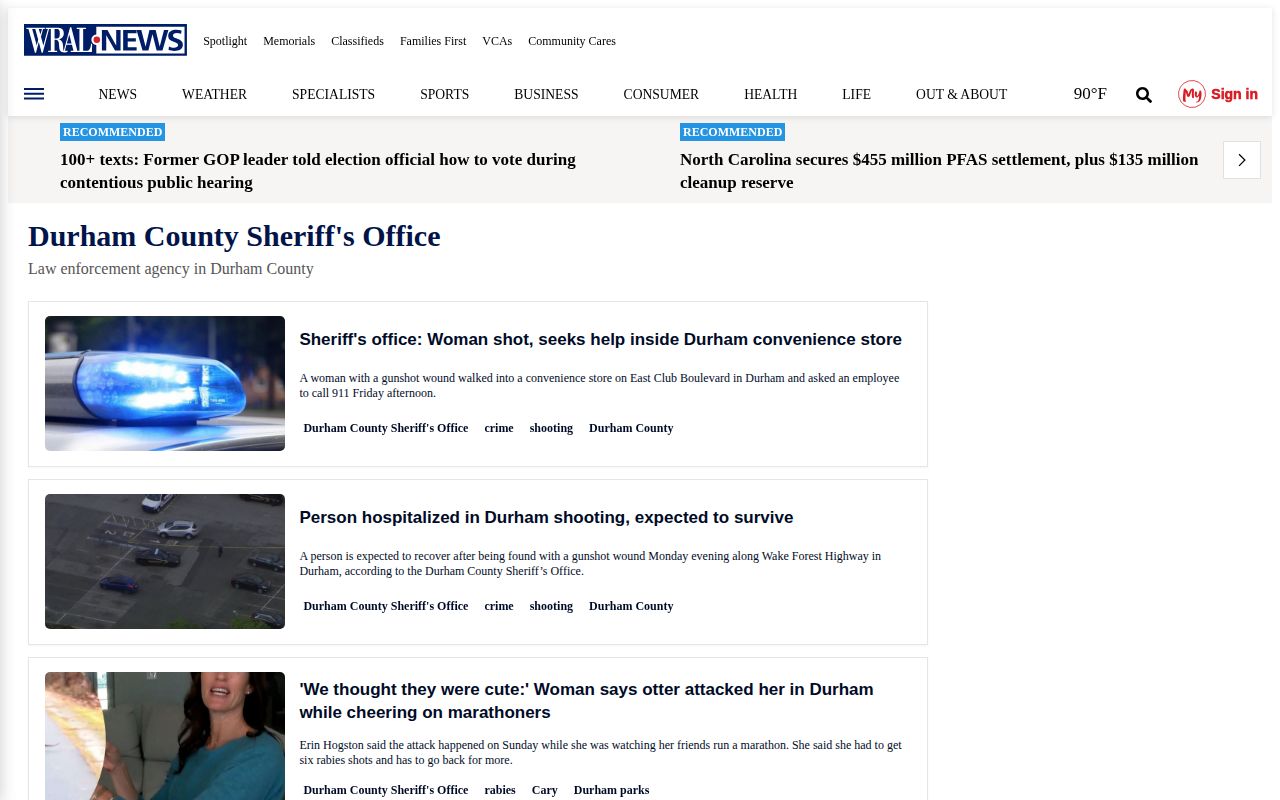
Use news reporting for context, then go back to the agency that made the arrest for the official record.
Weekend Arrest Report Gaps
No Durham agency promises a weekend or holiday posting schedule. Intake, police report review, press releases, and court entry each run on their own clocks. Friday-night activity can hit the live jail roster first. It may land there before any DPD bulletin appears. Someone released quickly may leave no roster trace when offices reopen. Work forward from the event date. Check the roster timestamp first, then search police bulletins across several days. Finish with the records unit or Clerk. A Monday press release can describe an older arrest. Never call a late post a new arrest unless the dates back that up. A new charge row can even appear during a custody stay that began earlier.
Arrest Archives and Retention
DCSO does not say how long a roster row stays public. North Carolina's county-sheriff retention schedule sorts records by series rather than promising one universal online archive. Arrest-processing tracking records may be destroyed after one year. Standalone arrest reports may be destroyed after five years. Incarceration records generally last three years after release or transfer. Case-file rules or agency policy can shift those periods. That schedule is only a framework. It does not prove a specific Durham record survives or that an old mugshot moved to the State Archives. Ask DCSO to name the record series and its custodian. Police records belong to the arresting agency. The official court file sits with the Durham Clerk of Superior Court. DPD posts separate open data reaching back to 2006 and refreshed yearly. Weekly crime statistics are a different product. These datasets help with trend research. They are not a person-by-person arrest archive, and they say nothing about current custody.
Calls Are Not Arrest Reports
The DCSO Calls for Service Reports page gives you last-24-hour and last-30-day windows. These can pass for a blotter at first glance. It isn't one. Those rows log complaints and incident locations, meaning calls the Durham County sheriff received. Some calls end with no arrest. Others lead to a warrant arrest that maps poorly to any single call. Keep a call number for a records request. Don't count the table as bookings.
News After an Arrest
Start with official releases, then court records, then local reporting. ABC11's Durham Safety Tracker fits last, since it tracks public-safety trends rather than bookings.
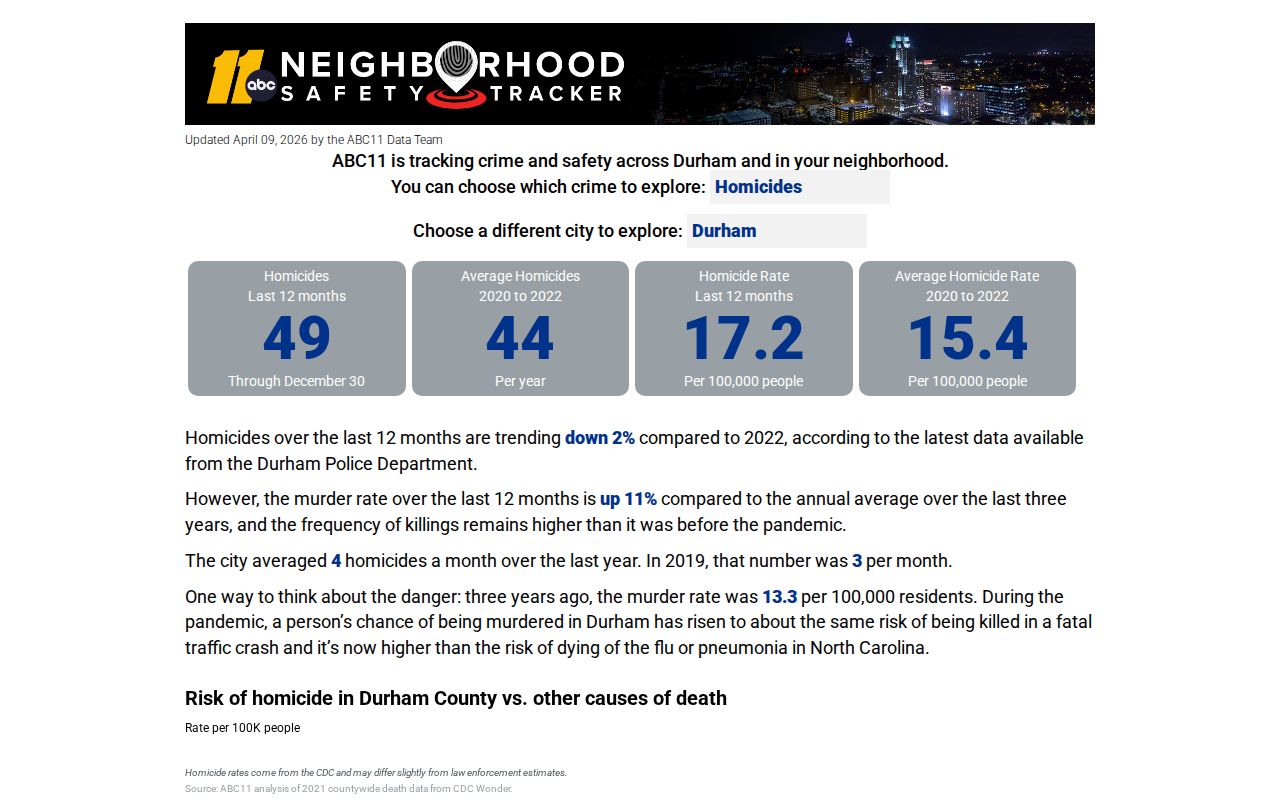
The tracker adds context around an event. It cannot confirm that a named person was booked. WRAL, ABC11, CBS 17, the Herald-Sun, and INDY Week pick stories editorially. Unofficial aggregators may keep copied person pages alive long after the official roster changes, with stale, duplicated, or mismatched details. They never replace DCSO, the arresting agency, or the Clerk.
Follow the docket to the final disposition and verify it with the official court custodian.
Follow the docket to the final disposition and verify it with the official court custodian.
Durham Trends Are Not Arrest Logs
Durham Police open data reaches back to 2006 and gets refreshed once a year. Weekly crime counts sit in a separate release. Those numbers paint broad trends in Durham. They can't tell you who was booked last weekend. A trend total bundles events into categories under strict data rules. An arrest report is different. It names a specific person and event. A jail roster, meanwhile, shows who is in custody right now. Pick the tool that fits the question. Open data suits long-range patterns, P2C holds reviewed police reports, DCSO shows current county custody, and the court docket tracks outcomes. Keeping those roles straight stops an annual dataset from being mistaken for a live arrest blotter in Durham County.
Request Older Durham Arrest Reports
The public window may come up empty. Write a narrow request to the agency that made the record. List the person's full name. Include the rough arrest date, the arresting agency, and any report or docket number. Describe exactly what you want. For DCSO report records, call 919-560-0898 or 919-560-0899. The Public Information Office takes email at PIO@DurhamSheriff.org. Ask the custodian which retention series covers the file. Ask whether the file still exists at all. The State Archives does not keep every old Durham roster or booking photo by default. A straight answer from the agency beats an unofficial page that may hold a stale or wrong copy of an old arrest.
Choose the Right Durham Record
Name the record precisely. For a police event in Durham, request the adult-arrest report or incident report, not a vague "arrest log." For a jail event, give the confinement date. Ask for the exact booking or release record. For a case outcome, hand the docket to the Clerk. Clear wording keeps one office from hunting through a record series another office maintains.
Dates can trip you up. An arrest, a report entry, a confinement, a charge, a news story, and a court filing may all carry different dates. Keep each label attached when comparing sources. That way an older Durham arrest doesn't get recast as new. A bulletin may simply have run late.
Identifiers vary by office too. The arresting officer and the jail custodian may not use the same numbers. Hang on to the police report number. Keep the sheriff OCA number too. Save the court docket and the exact displayed name as well. Those details let an agency find the right file. A bulletin or roster row may have rolled away by then.
Remember that layers answer different questions. Release doesn't erase the report. A live jail entry won't show how a case ended. The police report, the detention file, and the court record each cover separate ground in Durham County. Any careful multi-day review keeps them apart and checks corrections at the source.
Search Durham Arrest Reports
Begin with a name and a date range. Then confirm the arresting agency, the booking record, and the court outcome with each official custodian in Durham.
Sponsored Results